How to Get Over IELTS Speaking Anxiety and Speak Fluently
IELTS Speaking anxiety can make even confident English speakers hesitate, forget words, or worry about making mistakes. The good news is that speaking confidence can improve with structured practice, realistic mock tests, and regular feedback. Choosing the best IELTS coaching centre in Kerala can provide professional guidance, but consistent practice outside the classroom is equally important.
Quick Answer: How Can I Overcome IELTS Speaking Anxiety?
To reduce IELTS Speaking anxiety, understand the test format, practise speaking every day, avoid memorizing complete answers, record your responses, take regular mock tests, and focus on communicating ideas clearly rather than speaking perfect English. The more familiar you become with IELTS-style questions and timed speaking, the more comfortable you are likely to feel.
Why Do IELTS Candidates Feel Anxious?
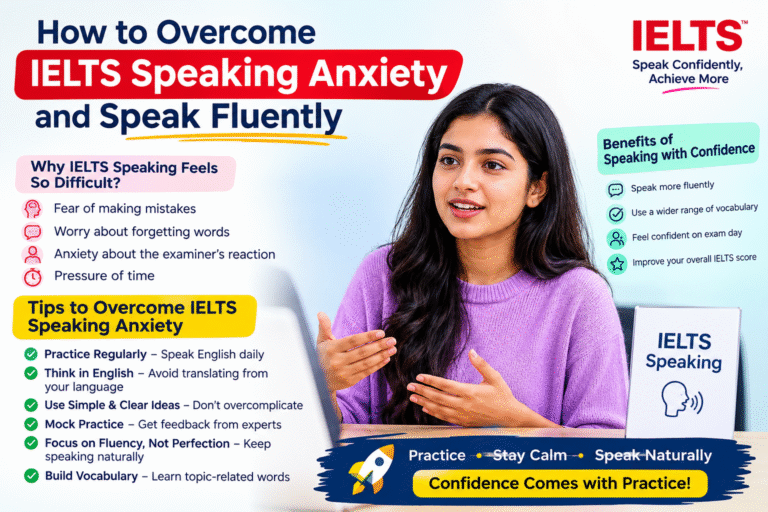
IELTS Speaking anxiety often comes from fear of making grammar mistakes, limited vocabulary, lack of practice, overthinking answers, or uncertainty about what the examiner will ask. Support from the best IELTS coaching centre in Kerala can help candidates identify these challenges and build confidence through structured speaking practice.
Some candidates also spend too much time translating thoughts from their first language into English. This can create unnatural pauses and make responses feel less spontaneous. Regular speaking exercises at the best IELTS coaching centre in Kerala can encourage candidates to think in English and respond more naturally.
Another common reason for anxiety is a lack of familiarity with the IELTS Speaking format. Understanding the assessment criteria and practising realistic conversations with the best IELTS coaching centre in Kerala can make the test environment feel more familiar.
Candidates may also worry about pronunciation, grammar accuracy, or giving the “wrong” answer. Guidance from the best IELTS coaching centre in Kerala can help learners focus on clear communication rather than trying to speak perfect English.
With consistent practice, feedback, and mock speaking sessions at the best IELTS coaching centre in Kerala, candidates can replace uncertainty with familiarity and approach the IELTS Speaking test with greater confidence.
1 Understand the IELTS Speaking Test Format
2 Stop Trying to Speak Perfect English
Knowing what to expect can reduce unnecessary nervousness. The IELTS Speaking test has three parts:
Part 1: Introduction and interview questions about familiar topics.
Part 2: An individual long turn based on a task card, with preparation time before speaking.
Part 3: A discussion that explores ideas related to the Part 2 topic in greater depth.
Practise all three sections rather than concentrating only on common questions. A good IELTS coaching centre in Kerala should provide realistic mock speaking tests and explain how responses are evaluated.
IELTS Speaking performance is assessed using four key criteria: fluency and coherence, lexical resource, grammatical range and accuracy, and pronunciation. Understanding these areas helps you identify exactly what needs improvement.
One of the biggest causes of speaking anxiety is the belief that every sentence must be grammatically perfect.
Your priority should be to communicate your ideas clearly and logically. If you make a small mistake, do not stop completely. Correct yourself when necessary and continue your answer naturally.
A trainer at the best IELTS coaching centre in Kerala can help you identify errors that affect your score while also protecting your fluency.
3. Practise Speaking Every Day
4. Learn to Think in English
One of the best ways to build your confidence is to practice speaking on a regular basis.
Choose topics such as:
Education
Work
Family
Hobbies
Technology
Travel
Environment
Daily life
Set a timer and speak for one or two minutes without reading from a script. Record yourself and listen for excessive pauses, repeated words, unclear pronunciation, and incomplete ideas.
Structured practice at the best IELTS coaching centre in Kerala can complement this daily routine through timed exercises and individual feedback.
Constantly translating from your first language can slow down your responses.
Start with simple exercises. Describe what you see around you, explain what you are doing, or mentally answer everyday questions in English.
For example, instead of translating a sentence word by word, practise forming the idea directly in English.
Listening to English conversations, podcasts, interviews, and educational videos can also expose you to natural vocabulary and sentence patterns.
5. Build Answers Naturally
6. Practise Unfamiliar Topics
Avoid memorizing complete IELTS Speaking answers. Memorized responses can sound unnatural and may not fit the examiner’s actual question.
Instead, use a flexible response structure:
Idea → Explanation → Example → Result or personal opinion
For example, if asked about a hobby, first state the hobby, explain why you enjoy it, give a personal example, and briefly describe how it benefits you.
The best IELTS coaching centre in Kerala can teach response-building strategies that help learners organize ideas without memorizing scripts.
Fluency should not depend entirely on familiar questions.
After practising common topics, challenge yourself with unfamiliar subjects. Give yourself a few seconds to organize your thoughts and then speak continuously.
This helps develop spontaneous communication skills and reduces the fear of hearing an unexpected question during the actual test.
7. Take Regular IELTS Speaking Mock Tests
8. What Should I Do If I Forget a Word?
Mock tests can make the examination environment feel more familiar.
During a mock test, practise:
Answering without memorized scripts
Maintaining natural eye contact
Speaking at a comfortable pace
Organizing ideas logically
Using appropriate vocabulary
Pronouncing words clearly
Responding to follow-up questions
After every mock test, ask for specific feedback. Rather than just asking, “What did I get?”, ask which areas are limiting your performance and what you should practise next.
This type of personalized feedback is one reason learners may consider the best IELTS coaching centre in Kerala when preparing for the speaking test.
Forgetting a word does not mean your answer has failed.
Try explaining the meaning using different words. For example, if you cannot remember the exact word for an object, describe its appearance, purpose, or function.
This technique keeps the conversation moving and demonstrates your ability to communicate even when you do not know a particular word.
Avoid stopping for too long while searching for one “perfect” word.
9. Manage Anxiety Before the IELTS Speaking Test
Simple preparation habits can help you feel more composed and confident during the IELTS Speaking test. Choosing the best IELTS coaching centre in Kerala can also help you practise speaking regularly, receive expert feedback, and become more comfortable with the exam format.
before speaking
- Take slow, comfortable breaths.
- Relax your shoulders and maintain a calm posture.
- Listen carefully to the examiner’s question.
- Take a brief moment to organize your answer.
- Begin with a simple and clear sentence.
- Maintain a natural speaking pace.
- Practise regularly with guidance from the best IELTS coaching centre in Kerala to build confidence.
A short pause to organize an idea is different from repeatedly stopping because of panic. The goal is controlled, natural communication. Regular mock speaking sessions and feedback from the best IELTS coaching centre in Kerala can help you manage anxiety and speak more confidently on exam day.
How Can IELTS Coaching Improve Speaking Confidence?
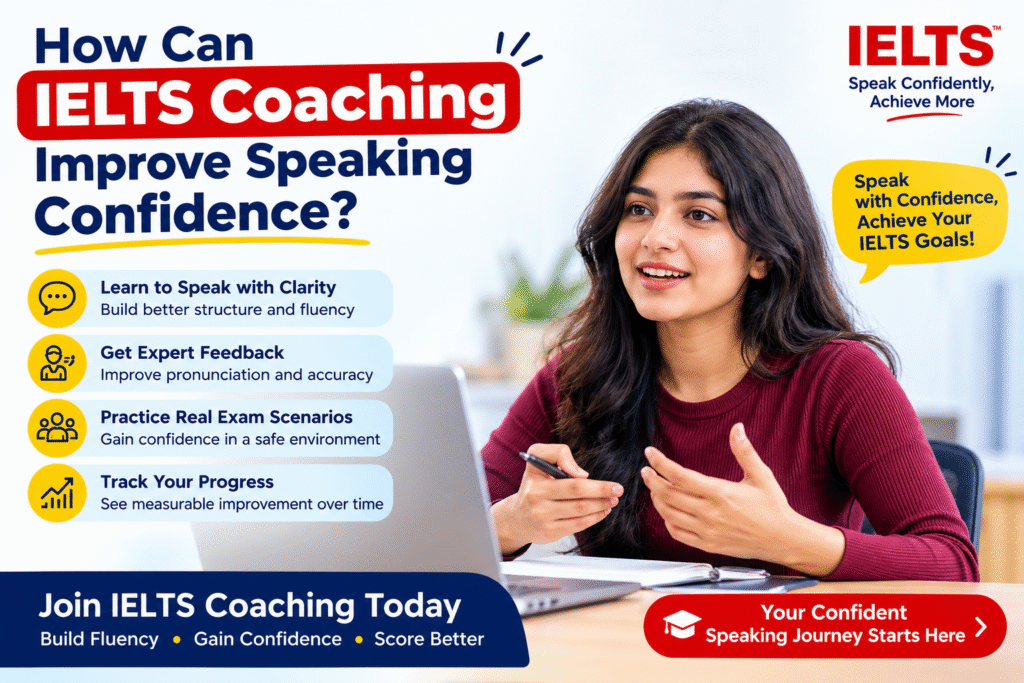
A structured coaching programme can provide opportunities that are difficult to create through independent practice alone. Depending on the institute, these may include speaking drills, mock interviews, trainer feedback, pronunciation practice, vocabulary development, and personalized improvement plans.
When evaluating the best IELTS coaching centre in Kerala, consider trainer expertise, the quality and frequency of mock tests, individual feedback, class size, preparation materials, and recent student reviews. Look for specific evidence of how the institute supports speaking improvement rather than relying only on promotional claims.
Frequently Asked Questions
How can I reduce IELTS Speaking anxiety?
How can I speak fluently in IELTS?
Practise speaking consistently, become familiar with the test format, record your answers, complete mock tests, and focus on communicating your ideas instead of trying to produce perfect English.
Speak regularly on both familiar and unfamiliar topics. Use simple language when necessary, connect your ideas logically, and reduce unnecessary pauses. Fluency develops through repeated active speaking practice.
Is it okay to pause during IELTS Speaking?
Should I memorize IELTS Speaking answers?
Yes. A short pause to organize your thoughts is natural. However, frequent long pauses or hesitation can affect fluency and coherence, so practise responding without overthinking every sentence.
No. Memorizing complete answers is not recommended. Prepare ideas, vocabulary, examples, and flexible structures instead. This allows you to adapt your response to the actual question.
What should I do if I make a grammar mistake?
Can IELTS coaching improve speaking confidence?
Do not panic. If the mistake is important, correct yourself naturally and continue. Small mistakes are part of normal communication, so avoid allowing one error to disrupt your entire response.
Yes, structured IELTS coaching can support speaking development through guided practice, mock tests, trainer feedback, and personalized strategies. The best IELTS coaching centre in Kerala should help learners understand their weaknesses and provide a practical plan for improvement.
Final Takeaway
IELTS Speaking anxiety becomes easier to manage when preparation becomes consistent and structured. Understand the test format, practise speaking every day, think in English, avoid memorizing complete answers, record your responses, and take realistic mock tests.
Most importantly, do not wait until you feel completely confident before speaking. Confidence is developed through speaking practice.
Whether you prepare independently or join the best IELTS coaching centre in Kerala, focus on clear communication, logical ideas, natural vocabulary, pronunciation, and steady fluency. With regular practice and useful feedback, you can approach the IELTS Speaking test with greater confidence.
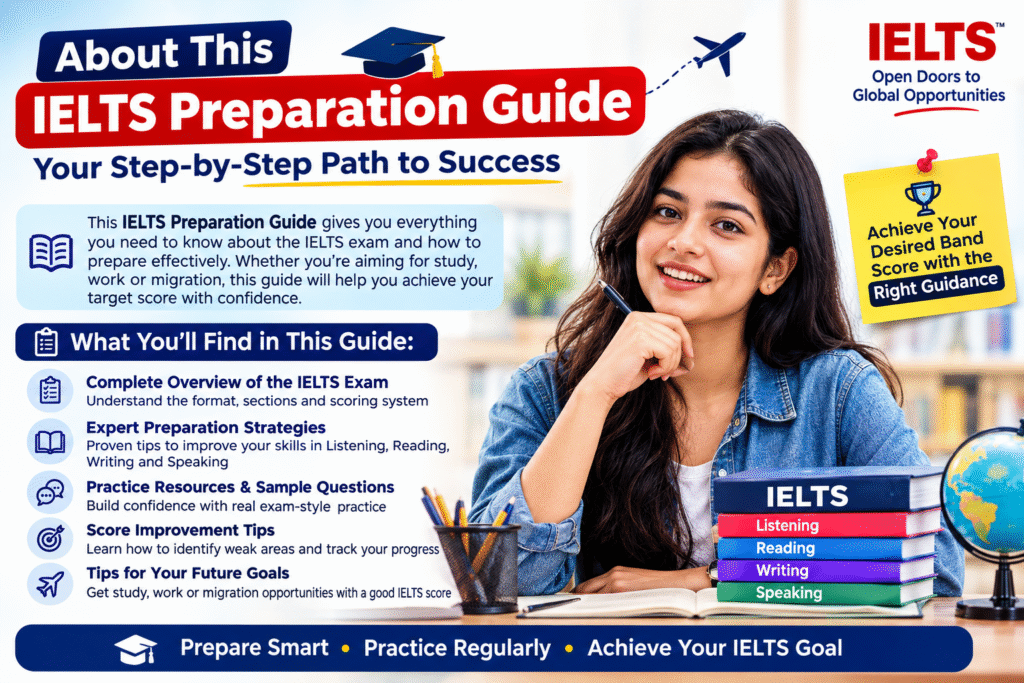
About This IELTS Preparation Guide
This guide is designed around practical IELTS Speaking preparation principles, including regular speaking practice, mock-test simulation, response organization, and feedback-based improvement. Candidates should also refer to the latest official IELTS information and assessment guidance when planning their preparation.
Last Updated: August 2026